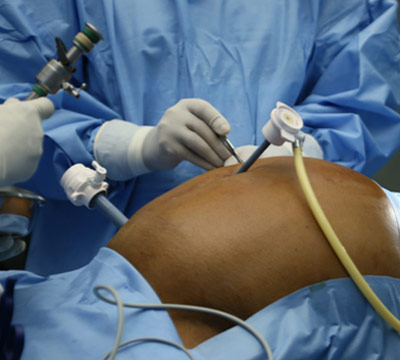
At Vardaan Hospital, The department of Gastroenterology offers to treat patients suffering from peptic ulcers, tumours & perforations, various types of gastro-intestinal surgery along with operating facilities for patients suffering from pancreas and liver related diseases
Important procedures include -
Endoscopy
The procedure detects and redresses gastrointestinal disorders like erosions, ulcers, tumours, perforations and malignancies. Reports of endoscopic procedures include video recordings as well. Vardaan Hospital offers ready treatment for various gastrointestinal disorders with procedures like
Interventional Gastroenterology
Colonoscopy
Prior to the procedure an IV is started and the patient is given a monitor for continuous monitoring of the heart, blood pressure, and oxygenation of the blood. Medication is often given through the vein to make the patient sleepy and relaxed. If needed, the patient may receive additional doses during the procedure. Colonoscopy often gives a feeling of pressure, cramping, and bloating, however, with the aid of the medication it is generally well tolerated and rarely causes any significant pain.
Patients will be lying on their left side or back as the instrument is slowly advanced. Once the tip of the colon, or the last portion of the small bowel, is reached the colonoscope is slowly withdrawn and the lining is again carefully examined. The procedure usually takes 15 to 60 minutes. If the entire colon, for some reason, can not be visualized, the physician may decide to try it at a later date with a better bowel preparation or may decide to order an x-ray of the colon.
Sigmoidoscopy
Sigmoidoscopy is an endoscopic procedure in which the doctor looks inside the large intestine with the help of a flexible tube with a light on the end. A rigid sigmoidoscope is not commonly used these days because the flexible tube is more comfortable for the patient and is easier to use for the physician. It also allows a longer segment of the large intestine to be examined.
Sigmoidoscopy is a diagnostic as well as a screening procedure. It is used in asymptomatic cases as a screening test for cancer of the large intestine. It is also used to assess a variety of disorders such as bleeding from the rectum, intractable or chronic diarrhoea, pain in the lower abdomen, and inflammation of the mucosal lining of the rectum.
The procedure does not require anaesthesia. The patient is asked to lie down on their left side with the knees bent and pulled up towards the abdomen. The tip of the sigmoidoscope is lubricated to lessen any discomfort. The inside of the large intestine can be viewed on a TV monitor and can be recorded on a video tape. A sample of tissue known as a biopsy may be taken for laboratory testing. Air is introduced into the intestines in order to view the intestines better.
Sphincterotomy
Sphincterotomy is a surgical procedure that involves treating mucosal fissures from the anal canal/sphincter. The word is formed from sphincter + otomy (to cut, to separate). The surgery can be performed under any kind of anesthesia. After anesthesia is administered, the area is cleaned with an antiseptic solution. The sphincter is separated either by simply stretching or cutting. Cutting the muscle prevents spasm and temporarily weakens the muscles. Both methods help the underlying area to heal.
Upper G I Endoscopy
Upper GI endoscopy is a procedure performed by a gastroenterologist, a well-trained specialist who uses the endoscope to diagnose and, in some cases, treat problems of the upper digestive system. The endoscope is a long, thin, flexible tube with a tiny video camera and light on the end.
The doctor may start by spraying your throat with a local anaesthetic. Then you will be given sedation to help you relax. You will then lie on your left side, a mouth piece will be put in your mouth and the doctor will pass the tube into your mouth and down your food pipe (oesophagus), stomach and duodenum (small bowel leading from the stomach). Small pieces of tissue (skin inside your oesophagus, stomach, duodenum) may need to be removed for pathology tests.
During the procedure, everything will be done to help you be as comfortable as possible. Your blood pressure, pulse and blood oxygen level will be carefully monitored. Your gastroenterologist may give you a sedative to help make you relaxed and drowsy, but you will remain awake enough to cooperate.You may also have your throat sprayed or be asked to gargle with a local anesthetic to help keep you comfortable as the endoscope is passed through. A supportive mouthpiece will be placed to help you keep your mouth open during the endoscopy. Once you are fully prepared, your gastroenterologist will gently maneuver the endoscope into position.As the endoscope is slowly and carefully inserted, air is introduced through it to help your gastroenterologist see better. During the procedure, you should feel little to no pain and it will not interfere with your breathing.Your gastroenterologist will use the endoscope to look closely for any problems that may require evaluation, diagnosis or treatment.In some cases, it may be necessary to take a sample of tissue, called a biopsy, for later examination under the microscope. This, too, is a painless procedure. In other cases, the endoscope can be used to treat a problem such as active bleeding from an ulcer.